SOC 2 vs ISO 27001: Which Compliance Framework Does Your Startup Need? (2026)
David Plaha
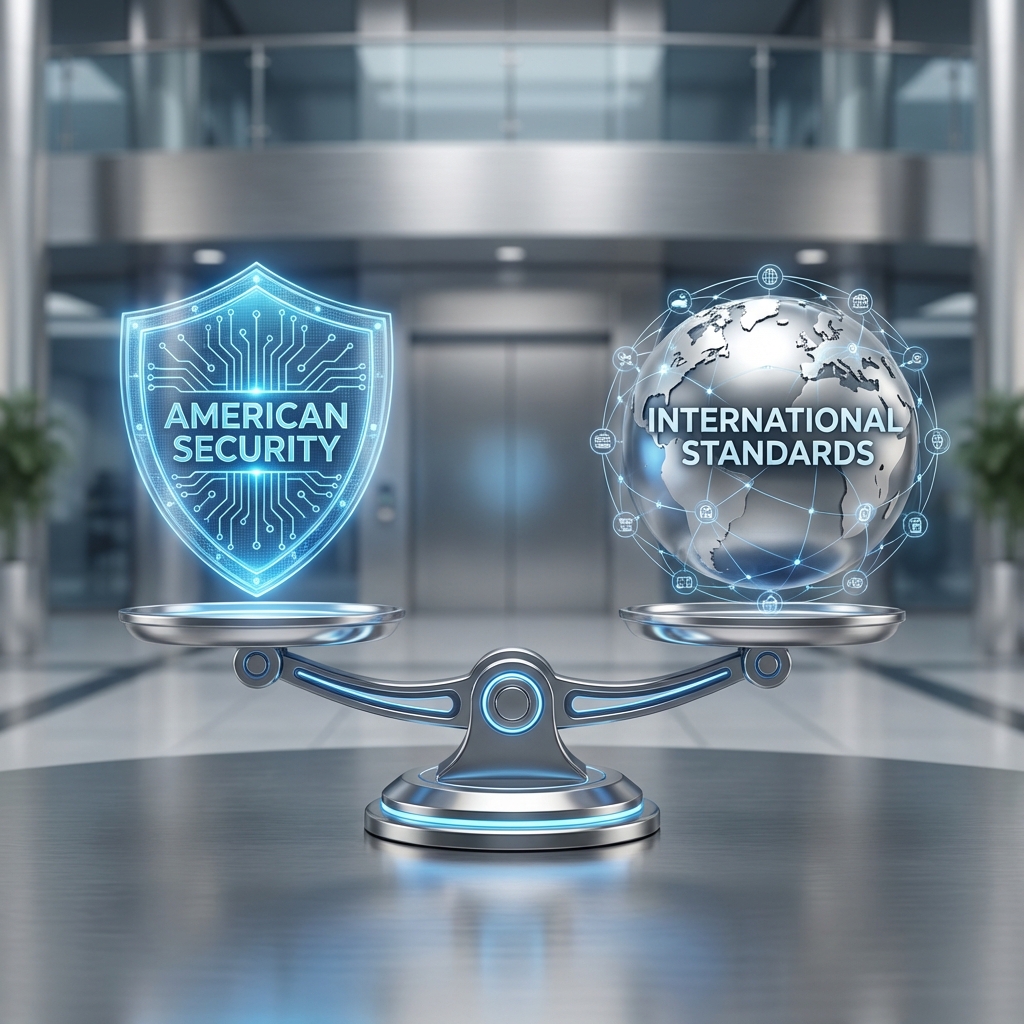
If you are a B2B startup founder or CTO, you have likely heard this from a potential enterprise client: "Send us your SOC 2 report, or we can't sign."
In 2026, security compliance is not a "nice-to-have" — it is the gatekeeper to revenue. But when you are staring at a limited budget and a tight roadmap, choosing between SOC 2 and ISO 27001 can feel paralyzing.
Both verify that you handle data safely. Both require audits. But picking the wrong one can cost you six months and $50,000 in wasted effort. This guide breaks down the differences, costs, audit processes, and strategic value of each framework so you can make the right decision for your business.
The Quick Answer: Which One Do You Need?
| Factor | SOC 2 | ISO 27001 |
|---|---|---|
| Primary market | North America (USA, Canada) | International (Europe, Asia, Middle East) |
| Focus | "Prove you did what you said" | "Prove you have a management system" |
| Deliverable | Attestation report (not a certificate) | Pass/fail certificate |
| Timeline | 2–4 months (Type I), 6–12 months (Type II) | 6–12 months |
| Audit cost | $15k–$30k | $20k–$40k |
| Best for | SaaS selling to US enterprises | Global operations, EU customers, government contracts |
| Compliance automation tools | Drata, Vanta, Secureframe | Same tools, plus ISMS-specific platforms |
Rule of thumb: If your first 10 enterprise customers are in North America, start with SOC 2. If your first 10 are in Europe or you are selling to public sector organizations, start with ISO 27001. If you need both, SOC 2 first — it is faster to achieve and immediately unblocks deals.
SOC 2 Explained
SOC 2 (Service Organization Control 2) is a framework developed by the AICPA (American Institute of Certified Public Accountants). Unlike a certification, SOC 2 produces an attestation report — a document from an independent CPA firm that states your security controls are designed correctly (Type I) and operated effectively over time (Type II).
SOC 2 Trust Service Criteria
The framework is organized around five Trust Service Criteria (TSC):
- Security (CC — Common Criteria): The mandatory baseline. Covers access controls, monitoring, incident response, and change management.
- Availability: System uptime and performance commitments.
- Confidentiality: Protection of designated confidential information.
- Processing Integrity: Completeness and accuracy of data processing.
- Privacy: Handling of personal information in accordance with your privacy notice.
Most startups begin with Security-only. Adding Availability is common for SaaS products with uptime SLAs. The Privacy criterion is increasingly requested by enterprise customers with GDPR obligations.
SOC 2 Type I vs Type II
- Type I: A point-in-time assessment — auditors review whether your controls are designed correctly. Achievable in 2–4 months. Useful for unblocking initial enterprise deals.
- Type II: A period-of-time assessment — auditors review whether your controls operated effectively over 6–12 months. This is what mature enterprise customers require. A Type I is often a stepping stone to Type II.
What Auditors Actually Review for SOC 2
Auditors will request evidence for each relevant control. Common evidence types include:
- Access control logs showing privileged access reviews were conducted quarterly
- Incident response records showing how incidents were detected and resolved
- Change management tickets showing security review was completed before code deployments
- Penetration test reports (required — an automated scan alone is not accepted)
- Vendor risk assessments for your critical third-party providers
- Security awareness training completion records
This evidence must be collected systematically. Compliance automation platforms like Drata, Vanta, or Secureframe integrate with your existing tools (GitHub, Okta, AWS, Jira) to collect and organize this evidence automatically, significantly reducing preparation time.
ISO 27001 Explained
ISO 27001 is an international standard from the International Organization for Standardization. Unlike SOC 2, it produces a binary certification — you either pass or fail. The certificate is issued for three years with annual surveillance audits.
ISMS vs Point Controls
The key distinction between ISO 27001 and SOC 2 is that ISO 27001 requires you to build an Information Security Management System (ISMS) — a systematic, documented approach to managing information security risk across the organization. This is not just a list of controls; it is a governance framework that includes:
- A defined risk assessment methodology and risk treatment plan
- An asset inventory with ownership assignments
- A Statement of Applicability (SoA) mapping 114 Annex A controls to your context
- A management review process with executive involvement
- A formal internal audit program
- Documented policies, procedures, and records for every applicable control
This is why ISO 27001 takes longer — it is building an organizational management system, not just implementing a checklist.
ISO 27001 Annex A Controls
The standard includes 114 controls organized into 14 categories, from physical security to cryptography to supplier relationships. A startup in a cloud-native environment will likely exclude many physical security controls (you may not have a data center) via the Statement of Applicability, but must justify each exclusion. Organizations running virtual desktop infrastructure should also review what VDI means for cybersecurity when assessing Annex A physical and logical access controls.
Key controls that startups frequently underestimate:
- A.12.6 Technical Vulnerability Management: Requires a formal patch management process and penetration testing
- A.14.2 Security in Development: Requires secure coding guidelines, code review, and security testing in your SDLC
- A.15.1 Supplier Relationships: Requires formal security assessments of vendors with access to your systems or data
- A.16.1 Incident Management: Requires a documented incident response procedure, tested regularly
Cost Comparison for Startups
SOC 2 Year 1 Budget (Realistic)
- Gap analysis / pre-audit readiness consulting: $5,000–$15,000
- Compliance automation platform (Drata, Vanta): $8,000–$15,000/year
- Penetration test (required): $8,000–$15,000
- CPA audit firm fee (Type I): $12,000–$20,000
- Total Year 1: $33,000–$65,000
ISO 27001 Year 1 Budget (Realistic)
- ISMS implementation consulting: $15,000–$35,000
- Internal audit (mandatory): $3,000–$8,000
- Penetration test: $8,000–$15,000
- Stage 1 + Stage 2 certification audit: $15,000–$30,000
- Total Year 1: $41,000–$88,000
Note: ISO 27001 requires surveillance audits in Years 2 and 3 ($5,000–$12,000 each) and a full recertification audit in Year 3.
Common Mistakes Startups Make
Waiting too long: Starting the SOC 2 process only after a customer has already asked for the report puts you 3–6 months behind. Begin the process proactively when you start selling to enterprise.
Choosing the wrong auditor: Not all CPA firms are equally experienced with technology companies. Choose a firm that specializes in SaaS and cloud-native organizations.
Inadequate access control evidence: The most common audit finding. Implement quarterly privileged access reviews from day one — not retroactively when the audit starts.
Skipping the penetration test: Both frameworks require it, and auditors check. An automated scan report is not a substitute.
Treating compliance as a one-time project: Both SOC 2 (especially Type II) and ISO 27001 require ongoing operational compliance. Evidence collection cannot happen only during audit preparation.
The Combined Strategy: When to Pursue Both
Most growth-stage startups eventually need both. The good news: there is approximately 75–80% overlap between the two frameworks at the control level. If you have built the access controls, logging, change management, and incident response processes for SOC 2, you have completed the foundation for ISO 27001.
Recommended sequence:
- SOC 2 Type I (months 1–4): Unblocks North American enterprise deals immediately.
- SOC 2 Type II observation period (months 4–12): Begin collecting operational evidence.
- ISO 27001 ISMS build (months 6–12, overlapping): Start building the ISMS documentation while you are already implementing SOC 2 controls.
- ISO 27001 certification (months 12–18): Complete the certification process using the security program already built for SOC 2.
This parallel approach typically costs 30–40% less than pursuing each independently.
How Cyberlord Helps Startups Get Certified
You do not need a full-time compliance officer to achieve certification. Cyberlord acts as your fractional CISO and compliance partner:
- Risk assessment and gap analysis: We map your current controls against SOC 2 and ISO 27001 requirements and build a prioritized remediation roadmap.
- Policy writing: We draft all required information security policies in plain language your team will actually follow.
- Penetration testing: A mandatory requirement for both frameworks — we provide the requisite penetration test report.
- Audit readiness reviews: We conduct a mock audit before your formal assessment to identify and close gaps.
Contact us for a free compliance scoping call. We will recommend the right framework for your business and give you a realistic timeline and budget.
Frequently Asked Questions
Can I use SOC 2 to satisfy EU customer requirements? In some cases, yes — especially if EU customers are primarily concerned with access controls and data security rather than GDPR-specific data processing requirements. However, enterprise procurement teams in Germany, France, and the Netherlands frequently request ISO 27001 specifically. If more than 20% of your pipeline is European, pursue ISO 27001.
How long does SOC 2 Type I take from scratch? With adequate preparation (gap analysis, control implementation, compliance tooling), most startups achieve Type I readiness in 8–16 weeks. The audit itself takes 2–4 weeks. Total time from start to report delivery: 3–5 months.
Do compliance automation tools like Vanta or Drata replace an auditor? No. These tools help you collect, organize, and demonstrate evidence for an auditor. The audit itself must be conducted by an independent CPA firm (SOC 2) or accredited certification body (ISO 27001). Automation tools significantly reduce audit preparation time and cost but do not replace the independent assessment.