Hire a Hacker to Catch a Cheating Spouse? Legal Options
CyberLord Editorial Team
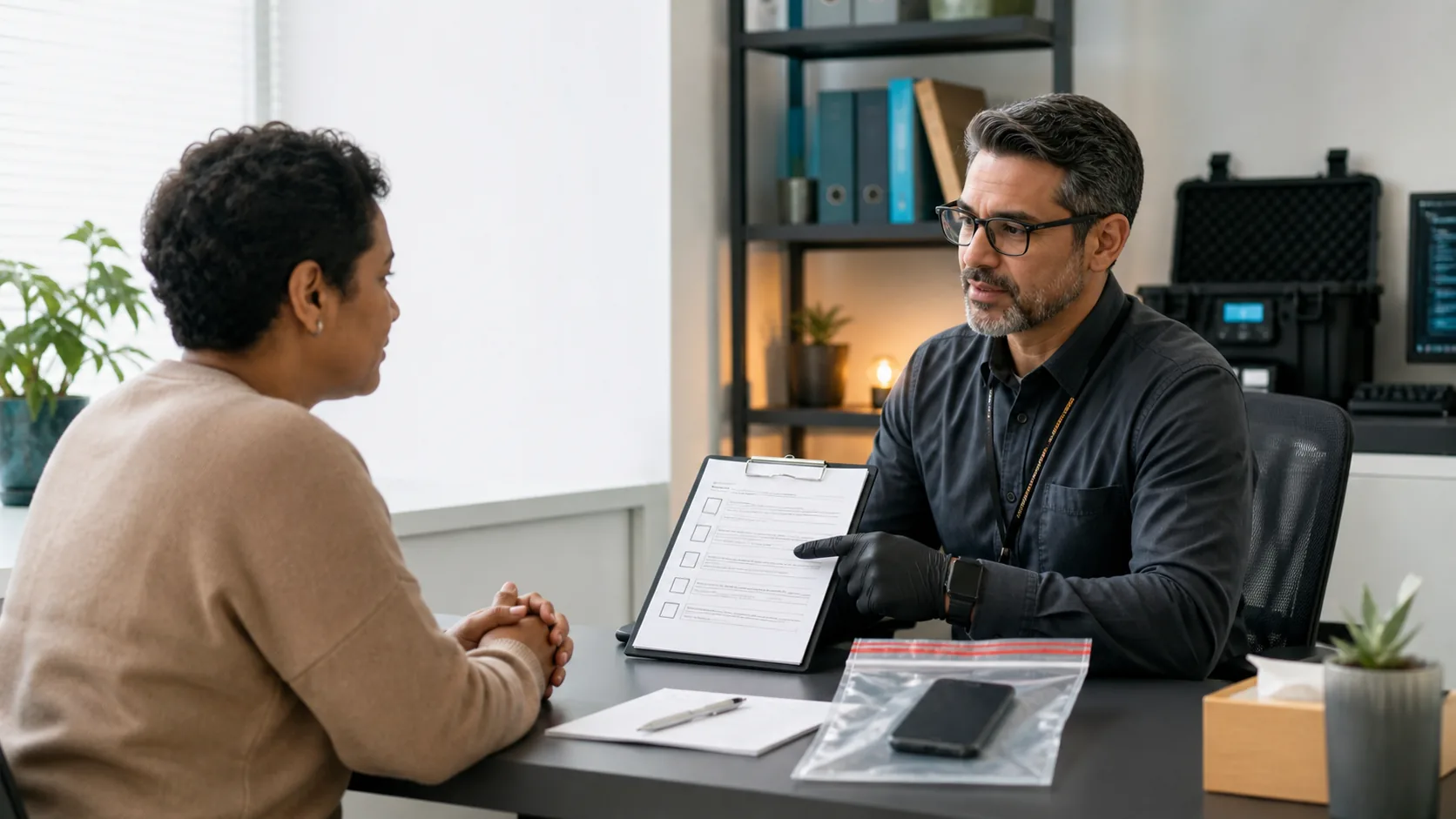
Suspicion can make a fast answer feel more important than the way it is obtained. That is exactly when anonymous sellers offer to break into WhatsApp, clone a phone or reveal a location for cryptocurrency. They usually provide no verifiable identity, written scope or lawful basis. Some take the payment and disappear. Others use the request to extort the buyer.
If you searched for hire a hacker to catch a cheating spouse, the service you need is not unauthorized access. The safer route is to decide what question you are trying to answer, preserve information you already have a right to access, and speak with a family lawyer or properly licensed investigator. This guide explains how to catch a cheating spouse without turning suspicion into a privacy violation or contaminating possible evidence.
Authorization rule: Do not access another adult's phone, cloud account, email, messages, microphone, camera or location without informed consent or specific legal authority. Paying for a device or sharing a home does not automatically create permission. Laws differ, so obtain advice in the relevant jurisdiction.
Why a supposed hacker is the wrong purchase
A credible security professional works from written authorization. A request to enter a spouse's private account cannot be converted into ethical hacking by paying a person who calls themselves a hacker. There is no company network owner authorizing a penetration test, no defined system boundary and no statement of work from the person whose account would be accessed.
The commercial risks are immediate. An anonymous seller may ask for an upfront crypto payment, identity documents, the target's phone number or credentials from the buyer. Those details can be resold or used for blackmail. A screenshot is not proof that access occurred, and a polished dashboard can display fabricated data. Promises such as "remote access with only a phone number" or "guaranteed deleted-message recovery" are warning signs.
Secret monitoring can also put the other person at risk. The US Federal Trade Commission describes stalkerware as software that may secretly expose a person's location, calls, messages, photos and online activity. If you think such software is already installed on your own phone, use a separate safe device to seek support before changing settings, because a sudden change can alert the person monitoring it.
Separate suspicion, facts and evidence
Start a private timeline. Record what you personally observed, when it happened and why it matters. Keep assumptions in a separate column. "The shared card shows a hotel charge on 12 August" is an observation. "That proves an affair" is a conclusion. Keeping the two apart makes a conversation with a lawyer, counselor or investigator much more useful.
Preserve only material you may lawfully possess. Examples may include your own messages, statements for a genuinely joint account, public posts and documents voluntarily sent to you. Keep originals unchanged, export them through normal account functions when available, and note where each item came from. Do not guess passwords, reset another person's account, use a logged-in session that you are not authorized to use, or trick a provider into releasing records.
Cloud sync creates another trap. A device may be physically shared while the account on it belongs to one person. Access rights do not become clear merely because a screen is unlocked. Before opening private messages or making a forensic copy, ask a lawyer whether you have authority and how collection should be documented.
Choose the right professional
Different questions require different professionals. A family lawyer can explain privacy, divorce procedure and the kind of evidence a local court may consider. A licensed private investigator can conduct lawful observation and public-record research within the rules of the jurisdiction. A digital forensic examiner can preserve and analyze a device only when the person submitting it has authority to do so. A relationship counselor addresses communication and safety rather than evidence.
Ask a prospective investigator for a legal name, business address, license number where licensing applies, insurance, written scope and fee schedule. Ask what they will not do. A professional should refuse account break-ins, hidden spyware on an adult partner and fabricated evidence. The agreement should identify the device or data source, the person authorizing the work, retention period, deliverables and deletion process.
For forensic work, ask how the original device will be protected, whether a working copy will be used, who will handle it, and how actions will be logged. A technical report is not automatically admissible in every court. Your lawyer should decide whether the method and expert are suitable for the case.
What monitoring applications can and cannot authorize
Monitoring software is a product, not permission. Some products are designed for a person's own device, a minor child's device where local law permits parental supervision, or a managed company device with notice and an appropriate policy. Those use cases do not make secret monitoring of an adult spouse lawful.
Before buying any app, identify the device owner, account owner, intended user, consent record, local legal basis and removal process. Read the current merchant terms and refund policy. Check operating-system compatibility and whether the product requires changes that weaken device security. If consent is unclear, stop and obtain legal advice.
Affiliate disclosure: Cyberlord may receive a commission if you purchase through the links below. The price should not increase because of the link. These products are listed only for consent-based parental, self-device or properly managed-device use. They are not recommended for secretly monitoring a spouse.
Check mSpy's current consent requirements, compatibility and pricing
Check Eyezy's current consent requirements, compatibility and pricing
A safer decision plan
First, decide whether you face an immediate safety risk. If confrontation could lead to violence or coercion, contact a local domestic-abuse service or emergency provider from a safe device. Do not announce evidence collection or remove suspected stalkerware until you have a safety plan.
Second, secure your own accounts. Change passwords from a trusted device, enable multi-factor authentication, review recovery addresses and sign out sessions you do not recognize. This protects your information; it does not grant access to anyone else's account.
Third, book a short legal consultation before commissioning surveillance or forensics. Bring your factual timeline and ask what may be collected, by whom and how. If professional investigation is appropriate, compare written proposals rather than promises made in encrypted chat.
Finally, set a stopping point. More data does not always produce more certainty. A professional plan should define the question, budget, duration and lawful deliverable before work starts.
How Cyberlord can help lawfully
Cyberlord can discuss incident response, account security and authorized digital forensics for devices and accounts you own or are expressly permitted to submit. We will not break into a spouse's account, install hidden surveillance on another adult or promise a legal outcome.
For an assessment, provide the device owner, your relationship to the data, the country involved and the question you need answered. We may request written proof of authority before examining anything. If the issue belongs with a family lawyer or licensed private investigator, the correct answer may be a referral rather than a technical service.
Request an authorization-first forensic consultation
For more detail, read our guides to authorized mobile-phone forensic examination and protecting your own iPhone from unauthorized access. The same authorization test applies before either route is used.
Frequently asked questions
Can I hire a hacker to catch a cheating spouse?
Do not hire anyone to enter another adult's phone or account without consent or legal authority. Use a family lawyer, licensed private investigator or authorized forensic examiner to identify lawful options.
Can I install an app if I bought the phone or pay the bill?
Payment does not automatically remove the user's privacy rights. Device ownership, account ownership, consent and local law are separate questions. Get advice before collecting communications or location data.
What records should I preserve?
Keep material you may lawfully access, including your own messages, genuinely joint financial records and public information. Preserve originals, document the source and avoid editing files. Ask a lawyer before making a forensic copy or opening another person's private account.
Sources and methodology
This article combines live Ahrefs research with a review of current search results and official privacy guidance. It is general information, not legal advice. See the FTC's stalkerware guidance and the European Data Protection Board directory for official starting points. Product links and terms should be checked again immediately before purchase.